
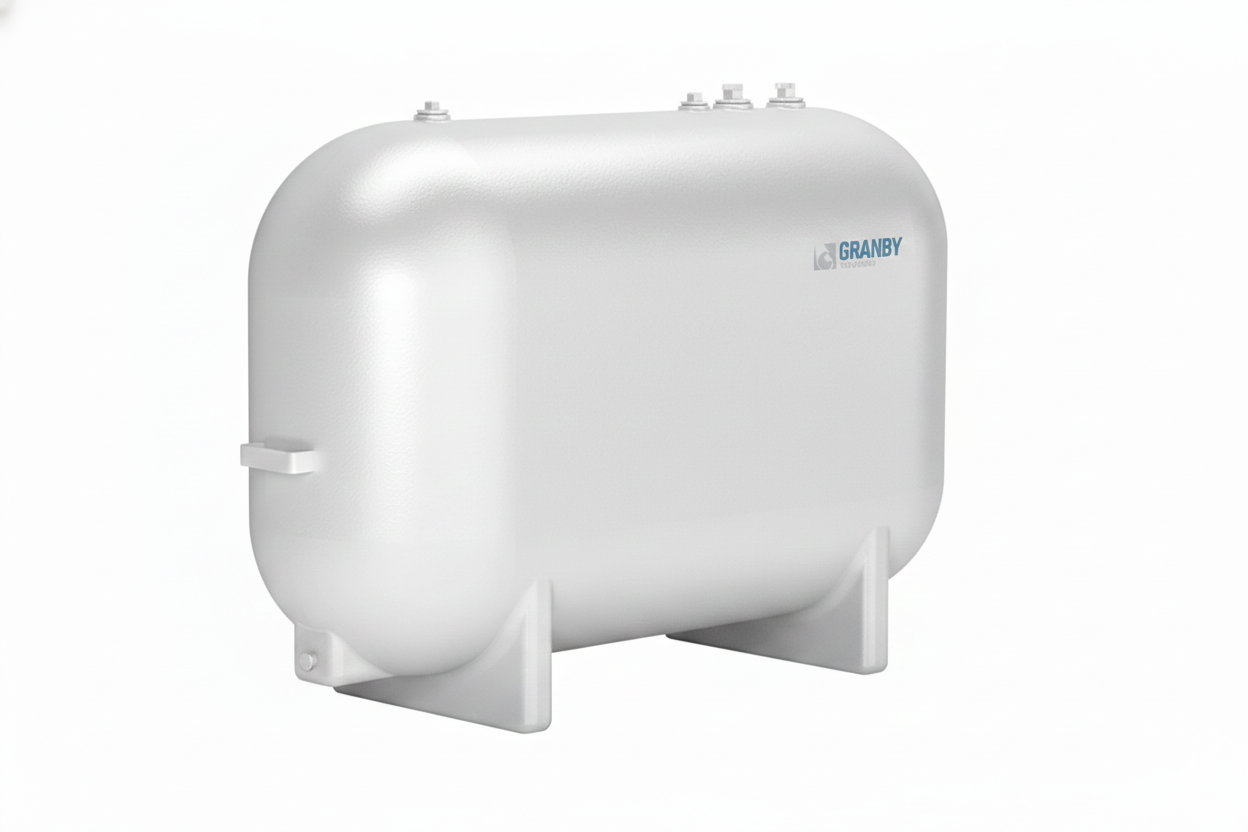

Fiberglass Diesel Fuel Tank
In the demanding world of diesel storage, traditional steel tanks have long been the standard. However, they come with inherent vulnerabilities that can lead to significant headaches and expenses over time. Rust, corrosion, and internal condensation are constant threats, compromising fuel quality, shortening tank lifespan, and requiring frequent maintenance or premature replacement.
It’s time for an upgrade.
Granby Fiberglass Diesel Fuel Tanks offer a revolutionary solution, engineered to outperform steel in every critical aspect. Crafted from high-strength, non-corrosive fiberglass, these tanks provide unparalleled protection against the elements, ensuring your fuel remains pristine and your investment lasts for decades.
Key Advantages of Granby Fiberglass Over Steel:
- Corrosion-Proof Peace of Mind: Unlike steel, fiberglass is naturally impervious to rust and corrosive substances, both internally and externally. This eliminates the risk of leaks, fuel contamination, and structural degradation caused by oxidation.
- Unmatched Longevity: Designed for extended service life, Granby fiberglass tanks resist the wear and tear that quickly afflicts steel. Enjoy decades of reliable performance without the concern of structural failure due to corrosion.
- Reduced Maintenance: With no rust to contend with, fiberglass tanks require significantly less maintenance than their steel counterparts. Spend less time and money on inspections, repairs, and protective coatings.
- Superior Fuel Integrity: The non-reactive nature of fiberglass ensures that your diesel fuel remains pure and uncontaminated. This is crucial for maintaining engine performance and avoiding costly repairs caused by compromised fuel.
- Lightweight & Easy Installation: Fiberglass tanks are substantially lighter than steel, simplifying transportation and installation, potentially reducing labor costs and equipment needs.
- Environmentally Responsible: By offering a longer lifespan and reducing the need for replacements, fiberglass tanks contribute to less waste and a more sustainable approach to fuel storage.
Make the intelligent switch to Granby Fiberglass Diesel Fuel Tanks and secure your fuel supply with a solution built for the future. Invest in durability, reliability, and peace of mind.
Frequently Asked Questions (FAQ)
Fiberglass vs. Steel Diesel Fuel Tanks
- Q: Why is fiberglass considered superior to steel for diesel fuel storage?
-
A: The primary advantage is corrosion resistance. Unlike steel, fiberglass is naturally impervious to rust, both inside (from condensation and biofuels) and outside (from weather or soil). This eliminates the leading cause of tank leaks, fuel contamination, and premature tank replacement, giving you decades of worry-free service.
- Q: Does fiberglass last as long as steel, or longer?
-
A: Fiberglass typically offers a significantly longer service life than traditional steel tanks. While steel tanks often degrade due to internal and external rust, high-quality fiberglass tanks are non-reactive and engineered to resist environmental stress, meaning they can last for 30 years or more with minimal maintenance.
- Q: Can diesel fuel, especially modern blends with biodiesel, damage fiberglass tanks?
-
A: No. Granby fiberglass tanks are chemically inert and fully compatible with all common diesel blends, including high-percentage biodiesel blends (B20+). In fact, these blends can accelerate corrosion in steel, making fiberglass the much safer, long-term choice for modern fuels.
- Q: Are fiberglass tanks durable and strong enough to withstand wear and tear?
-
A: Absolutely. Fiberglass is a composite material known for its high strength-to-weight ratio. They are engineered to be extremely robust, resisting impacts and pressure while maintaining structural integrity over their entire lifespan. They are designed to meet or exceed all relevant industry standards for fuel storage.
- Q: What about installation? Are fiberglass tanks harder to install than steel?
-
A: Fiberglass tanks are actually much easier to handle and install because they are significantly lighter than their steel counterparts. This reduced weight can simplify logistics, lower transportation costs, and reduce the heavy equipment and labor required for placement, especially in residential or tight access installations.
- Q: Do fiberglass tanks require special maintenance or coatings?
-
A: No. One of the biggest advantages is the near-zero maintenance required for corrosion protection. Unlike steel tanks, which may need periodic coatings or cathodic protection systems to fend off rust, fiberglass tanks maintain their integrity without any additional protective measures.

Reviews
There are no reviews yet.