
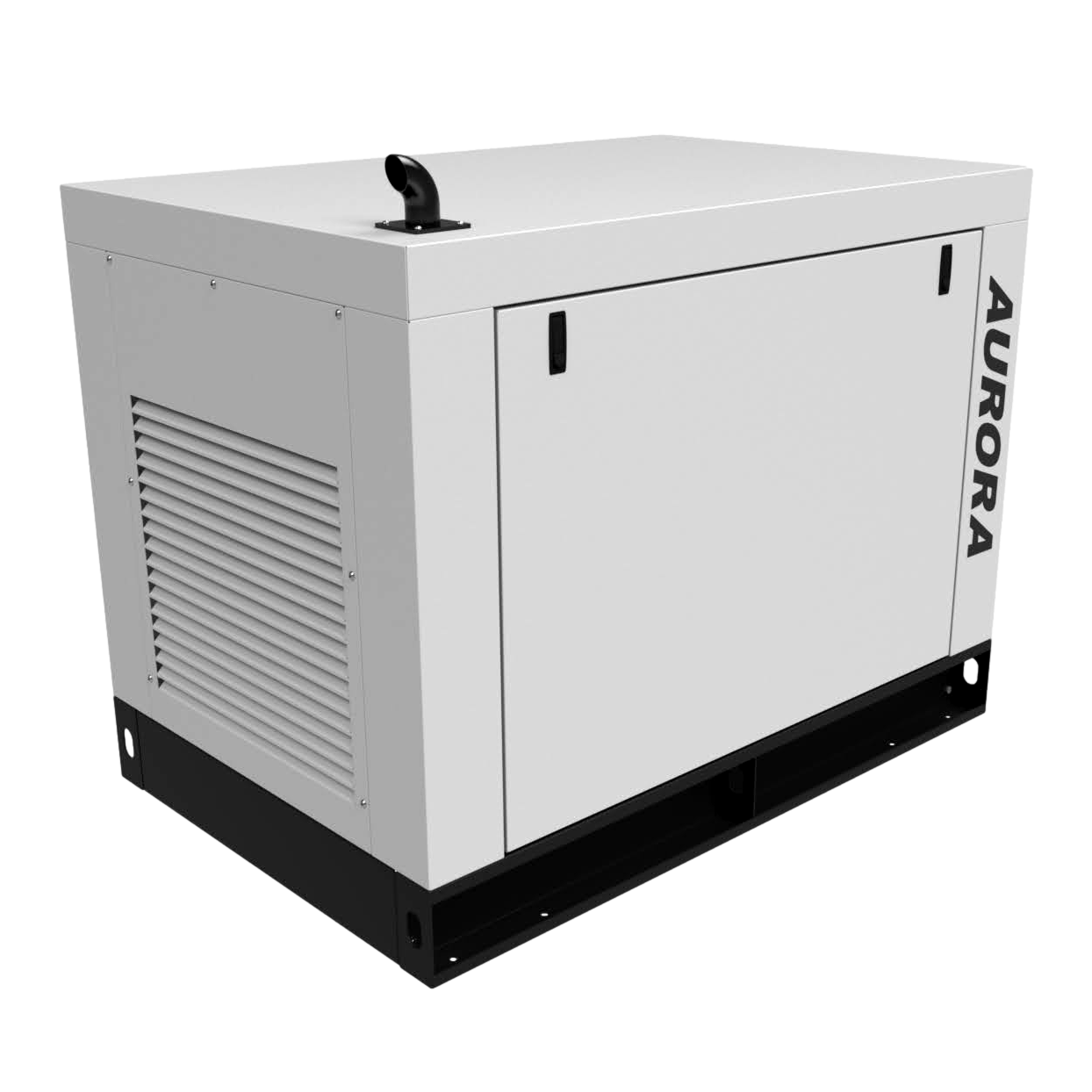


Why choose a 48 VDC diesel generator for battery charging
A 48 VDC diesel generator charges your battery bank directly. You avoid AC-to-DC conversion losses from rectifiers and keep the engine running in a healthier load range compared to typical AC sets running light while a charger does the work. Telecom-grade rectifiers are efficient but still lose a few percent as heat. Direct DC cuts that out and reduces runtime for the same energy stored.
- Higher overall charging efficiency.
- Better engine loading. Battery-charging duty allows you to set the current so the engine operates in a healthier, more efficient range compared to idling at low load. Running diesels at low loads for extended periods can lead to wet stacking and deposits.
- Less gear to buy and maintain. No separate high-wattage rectifier cabinet for charging. Fewer failure points. In telecom, DC gensets can keep sites alive even if the external rectifier fails.
- Cleaner DC for electronics. Low-ripple DC output protects sensitive gear and batteries during charge. (Your spec already states ripple under 1 percent.)
- Simpler auto-start. Two-wire start integrates with common inverter-chargers and GX/AGS modules.
| Topic | 48 VDC Diesel Generator | AC Generator + Rectifier/Charger |
|---|---|---|
| Energy path | Engine → DC alternator → Batteries | Engine → AC alternator → Rectifier/Charger → Batteries |
| Conversion loss | Minimal conversion | ~4% loss at the rectifier (typical 96% efficiency) |
| Engine loading | Set DC current to keep engine in an efficient band | Often runs light while charger limits power → poor fuel use |
| Reliability | Fewer devices in the charging chain | More parts. If rectifier fails, charging stops |
| Integration | Two-wire auto-start with Victron, Schneider, OutBack | Same auto-start possible, but still depends on rectifier |
| Use case fit | Off-grid, telecom cabinets, energy storage | Sites that already need large AC loads running continuously |
How this generator charges batteries
- Constant-current phase. Set your charge current limit to match battery acceptance and keep the engine in a healthy load range.
- Constant-voltage finish. Adjustable 48 to 59 VDC allows proper absorption and finish charge under supervision of your BMS or charge controller.
- Low ripple DC. Your Linz alternator spec lists ripple under 1 percent, which is suited to sensitive DC systems.
- Auto-start. Works with two-wire start from Victron GX, Schneider XW Pro AGS, and OutBack AGS or AUX relay.
System integration tips
- Use Two-wire auto-start. This can be a normally open or normally closed dry contact.
- Controller Telemetry: DynaGen TG350 supports J1939 and offers a Modbus variant for SCADA and remote monitoring
- Engine Health: Avoid Extended Low-Load Operation. Plan charge cycles that keep the engine loaded enough to prevent wet stacking.
Instrumentation, Protection & Control
Operating this generator is simple, as it utilizes a DynaGen TG350 controller. Additionally, it offers advanced instrumentation, protection, and control.
• Displays voltage, speed, frequency, battery voltage, fuel level, oil, coolant temperature, etc.
• 150 events log
• Auto-start (two-wire compatible)
• Exercise
• Password protection
• End user programmable
Fuel Tank
The included internal tank holds enough fuel to run the generator over 24 hours. A fuel level gauge on the tank lets you easily see how much fuel is remaining. The generator controller also monitors the fuel level in the tank and can warn you when it reaches a set low point and even shut down the generator before it’s empty to make sure restarting is as easy as possible.
Construction
- All stainless steel fasteners are used.
- Powder-coated steel enclosure
- Powder-coated steel frame
- Vibration Mounts on engine and alternator
- Dimensions – 57″ x 33″ x 40″ (L x W x H)
- Weight – 850 lbs
Reviews
There are no reviews yet.