
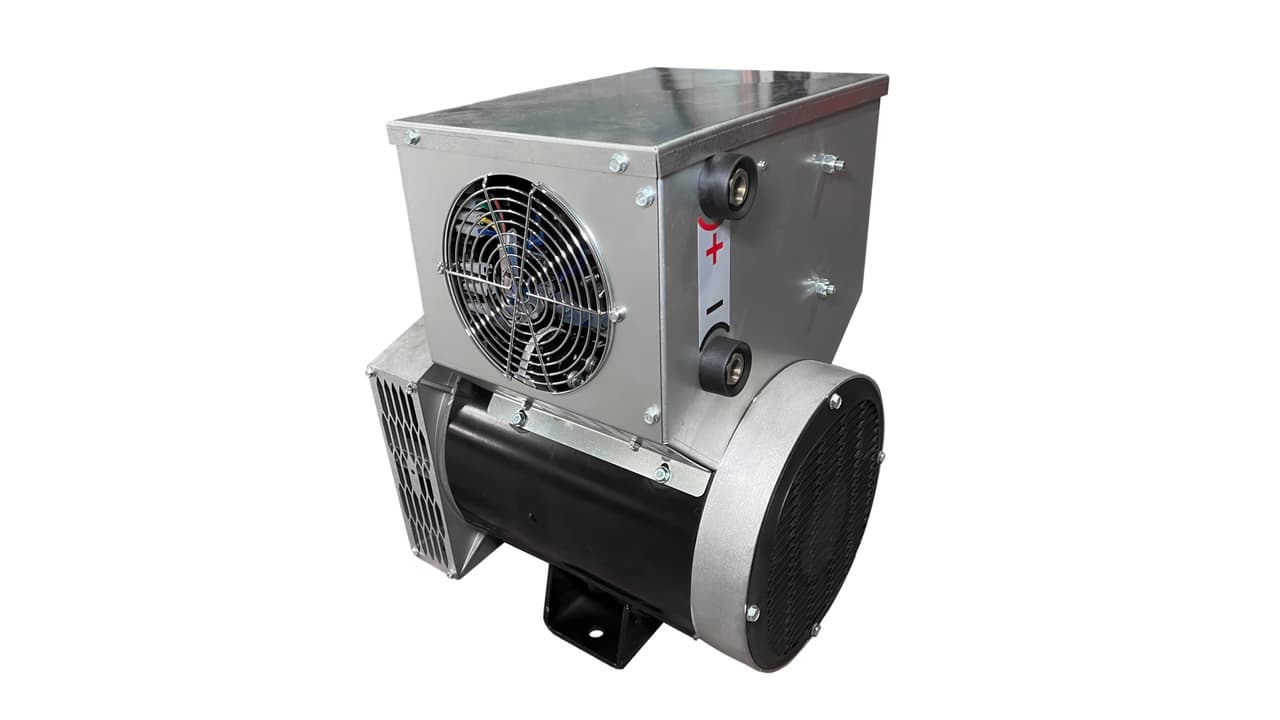
When it comes to charging batteries for off-grid or telecom use, a DC generator is purpose-built to deliver direct current at the correct voltage, eliminating the need for a separate inverter or charger. This section explains how DC generators operate, the voltages they produce, and why they are well-suited for remote power systems.
How Does a DC Generator Charge Batteries?
A DC generator produces regulated direct current (DC) power that matches the voltage of your battery bank. This allows for efficient, direct charging without conversion losses.
1. DC Output Matches Battery Bank Voltage: The generator provides an output voltage slightly above the battery’s nominal voltage, allowing current to flow into the batteries and recharge them safely.
2. Built-In Voltage Regulation: The generator includes an automatic voltage regulator or dedicated controller to maintain safe voltage levels and prevent overcharging or undercharging.
3. Controlled by Battery Monitoring: Many systems use a controller, such as the DynaGen TG350, to monitor battery voltage or state of charge. This allows the generator to start and stop automatically according to the battery’s needs.
4. Charging Stages: Some systems are configured to follow bulk, absorption, and float charging stages for optimal battery performance and longevity.
5. Current Limiting: Most DC generator systems also have “current limitors” that you can adjust to ensure the output never exceeds your set value. This is added protection to prevent overloading the battery and for better control over the required charging rate. In this case, the voltage is automatically adjusted to maintain a constant current flow while the generator is running.
What Voltages Are Available?
DC generators are commonly available in the following voltages:
- 12 Volt DC – Suitable for small systems such as RVs, boats, or single-battery setups.
- 24 Volt DC – Common in medium-sized off-grid and backup power systems.
- 48 Volt DC – Standard in telecom applications and larger off-grid systems using solar or battery storage.
Custom voltages may also be available for specific applications on request.
Example: Off-Grid Cabin
A cabin with a 48V battery bank uses a DC generator for backup charging after several days of low solar input. The generator starts automatically when the voltage drops and shuts off when charging is complete, saving fuel and extending battery life.
Example: Telecom Tower
Telecom towers often use 48V systems. A DC generator provides clean, reliable power to the battery bank without needing conversion to or from AC, minimizing points of failure and maximizing uptime.
Can DC Generators Charge Lithium Batteries?
Yes, but they must be properly configured. Lithium batteries, including LiFePO4, require precise voltage control. A compatible generator paired with a battery management system (BMS) can safely charge these advanced batteries.
Reminder
When you’re miles from the nearest grid connection, direct DC charging isn’t just efficient — it’s practical. The fewer components you rely on, the fewer things that can go wrong.
Share this:
- Print (Opens in new window) Print
- Email a link to a friend (Opens in new window) Email
- Share on Facebook (Opens in new window) Facebook
- Share on LinkedIn (Opens in new window) LinkedIn
- Share on Reddit (Opens in new window) Reddit
- Share on Pinterest (Opens in new window) Pinterest
- Share on Threads (Opens in new window) Threads
- Share on X (Opens in new window) X
- Share on Bluesky (Opens in new window) Bluesky