
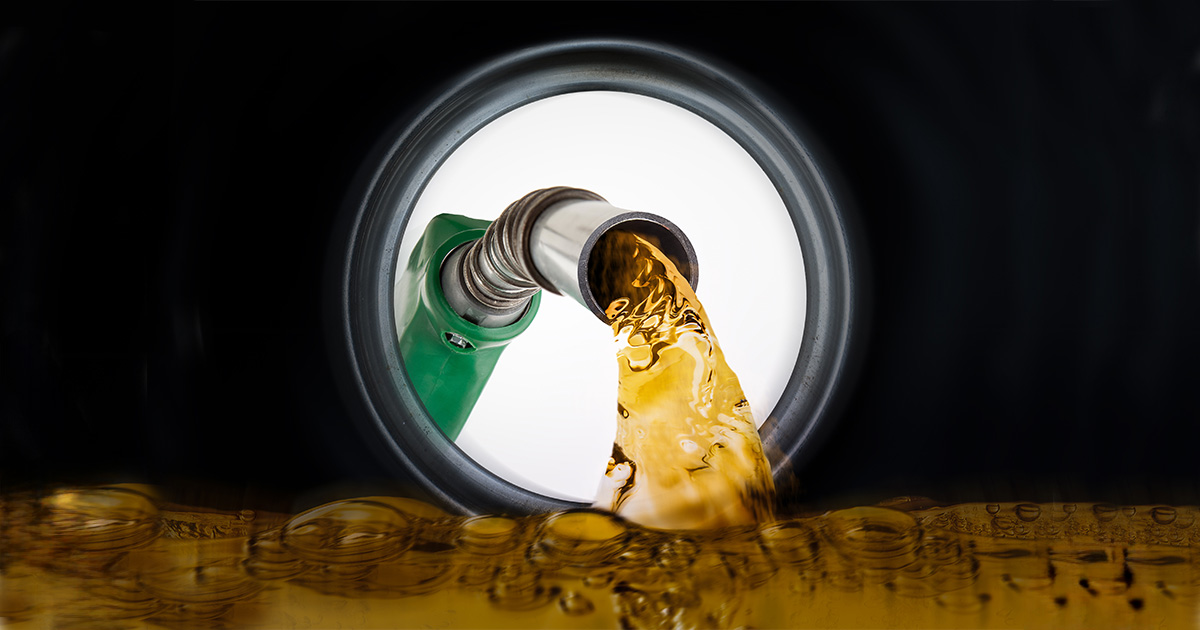
"Rudolph Diesel’s First Engine Was Designed To Run On Peanut Oil"
WHAT IS DIESEL FUEL?
Diesel fuel is principally a blend of petroleum-derived compounds called middle distillates (heavier than gasoline but lighter than lube oil) and may or may not contain additional additives. Other middle distillates include kerosene and No. 2 Heating Oil. Diesel fuel is designed to operate in a diesel engine where it is injected into the compressed, high-temperature air in the combustion chamber and ignites spontaneously. This differs from gasoline, which is ignited in a gasoline engine by the spark plugs.
Why Are Diesel Engines So Popular?
Diesel engines deliver 20% to 40% better fuel economy than gasoline engines. Diesel fuel does not require as much refining. Diesel engines are simple and easy to maintain. Diesel engines do not use spark plugs, ignition cables, carburetors, and complicated fuel control devices. There are fewer harmful emissions from diesel fuel than gasoline. With new ultra-low sulphur diesel fuel, the benefits to the environment are huge.
Winter Vs Summer Diesel Fuel
To keep diesel fuels with low-temperature flow characteristics, fuel suppliers adjust the fuel properties throughout the year according to historical temperature data and where the fuel is sold. Generator owners may have fuel sitting in their tanks or storage for long periods. In cold weather, it would be advisable to add a fuel anti-gel additive. Anti-Gel treatment may be conveniently poured into the fuel tank before filling. It is inexpensive and worth spending the time to do it.
Diesel Smoke
When a cold diesel engine is started, the walls of the combustion chamber are still cold. The low temperature in the combustion chamber results in incomplete combustion and creates the white smoke you see.
Cetane
Cetane is to diesel engines as octane is to gasoline engines. The Cetane number is a measure of how readily the fuel starts to burn (auto-ignites) under diesel engine conditions. A fuel with a high cetane number starts to burn shortly after it is injected into the cylinder; it has a short ignition delay period. Conversely, a fuel with a low cetane number resists auto-ignition and has a longer ignition delay period.
What Makes A Diesel Engine Noisy?
The noise produced by a diesel engine is a combination of combustion noise and mechanical noise. Fuel properties can affect only combustion noise. Some combustion noise is reduced in generators by using direct injection. A good muffler system can reduce a great deal of noise. Increasing the cetane number of the fuel can decrease the amount of knock also.
Low-Sulfur Diesel Fuel
Modern, clean diesel engines today are designed to use ultra-low sulphur fuel. They do not suffer from the issues older engines did when this fuel was introduced.
There are many ways of removing the sulphur content. The cheapest of these involves hydrotreating, a process that removes sulphur by treating it with hydrogen. Unfortunately, hydrogen is highly reactive and also reduces the lubricity or lubrication properties of the end-product diesel.
FUEL INJECTORS
Most diesel engine problems are related to the fuel system. The fuel injectors and fuel pumps must be lubricated and kept deposit free. Since sulfur has been removed from fuels, a fuel system additive that helps clean and lubricate the fuel system is required. You should use the additive with every fill up. Failure to use it will result in unusual wear and tear that will not be covered under warranty. (Modern engines today do not require any additives but it may sure help)
BLACK SMOKE
Excessive diesel smoke is due to incomplete combustion, a rich air-fuel mixture. This may be the result of problems with the fuel injector pump or its timing. It may be a clue that the air cleaner is choked. Worn or damaged fuel injectors and adulterated diesel fuel can also cause this.
WHITE SMOKE
White smoke occurs mainly during cold starts, when the fuel tends to condense into liquid and does not burn due to cold engine parts. The most common reason for white smoke are in-operative glow plugs, low engine compression, a bad injector spray pattern, late injection timing or injection pump problems.
BLUE SMOKE
Excessive blue smoke indicates problems from low engine compression and/or worn piston rings, scored cylinder walls or leaking valve stem seals The blue smoke is caused by crankcase oil entering the combustion chamber and being emitted after partial combustion through the exhaust
Diesel Fuel In Cold Weather
Below 15 degrees F, wax crystals begin to form in diesel fuel. These will clog the fuel filter and stop the engine as the temperature drops toward 0 F. Any good “winter fuel conditioner” for diesel fuel will keep the fuel moving to at least -20 degrees. Follow the instructions on the bottle.
Deposits And Corrosion
Residual carbon deposits from combustion can build up in nozzles and around the orifices and can obstruct the atomization of the fuel into the air preventing complete combustion. Deposit modifiers and detergents soften the hard deposits allowing for their removal. The detergent will clean the soft deposits and prevent additional deposit build-up. Also, they incorporate an anti-oxidant, which helps fuel maintain its potency, and a corrosion inhibitor to protect fuel injection parts from rust.
Share this:
- Print (Opens in new window) Print
- Email a link to a friend (Opens in new window) Email
- Share on Facebook (Opens in new window) Facebook
- Share on LinkedIn (Opens in new window) LinkedIn
- Share on Reddit (Opens in new window) Reddit
- Share on Pinterest (Opens in new window) Pinterest
- Share on Threads (Opens in new window) Threads
- Share on X (Opens in new window) X
- Share on Bluesky (Opens in new window) Bluesky