
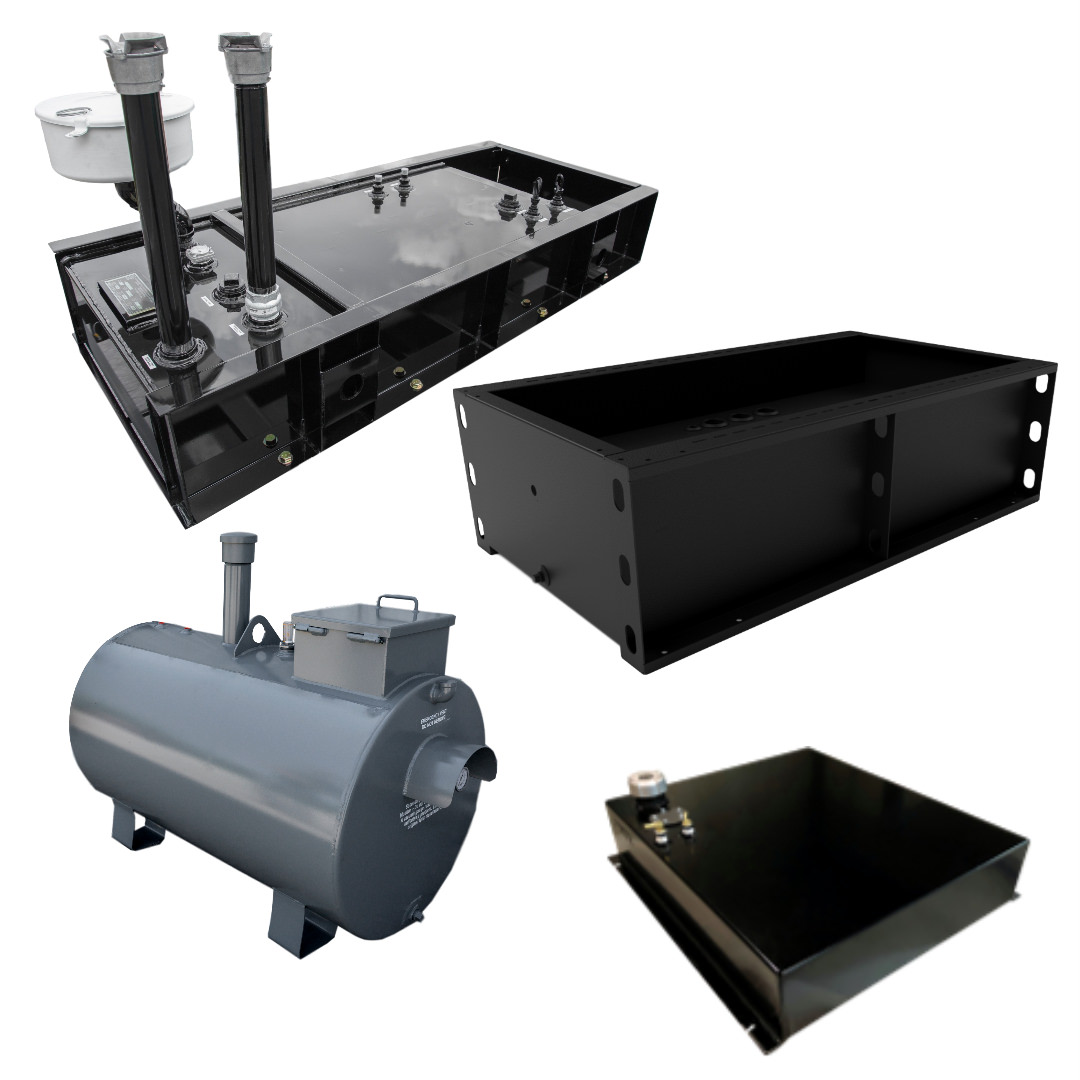


Choosing the Right Diesel Fuel Tank for Your Generator: Built-In, Sub-Base, or Stand-Alone?
When selecting a diesel generator for backup power, off-grid use, or continuous operation, one important decision that is often overlooked is the type of fuel tank to use. Your choice of fuel storage affects everything from runtime and refuelling intervals to installation footprint and safety compliance.
At Aurora Generators, we offer several fuel tank configurations to match different applications:
- Built-in fuel tanks integrated into the generator base
- Sub-base tanks are mounted beneath the generator
- Stand-alone tanks are placed near the generator and connected with fuel lines
Each configuration has its advantages and limitations depending on your intended use, available space, and local regulations. This guide provides a detailed explanation of each option to help you make an informed decision.
1. Built-In Fuel Tanks (Integral Tanks)
Aurora’s built-in diesel fuel tanks typically have a capacity of 12 gallons (45 litres). These tanks are integrated directly into the generator’s base, making them compact, self-contained, and ideal for residential or light commercial use.
Because they fall below regulatory thresholds in both Canada and the U.S., no compliance certifications or permits are required when installed outdoors. This makes built-in tanks an inexpensive and straightforward option for most users.
Advantages:
- No additional installation work or external plumbing required
- No compliance costs when installed outdoors
- Lower risk of fuel spoilage or contamination due to smaller volume
- Compact design is ideal for tight installation spaces
Considerations:
- Limited runtime before refuelling (often around 24 hours under load)
- Not suited for extended outages or continuous duty
- Expansion requires external tank integration
2. Sub-Base Fuel Tanks
Outside Canada, Aurora also offers 50-gallon single-wall sub-base tanks, which are popular in less-regulated areas. However, these are not suitable for regions requiring double-wall construction or environmental containment.
In North America, larger sub-base tanks must meet safety codes such as UL-142, UL-2085, or CSA B139. These tanks are built as tank-within-a-tank systems, including emergency vents, leak sensors, and alarms to contain spills and protect the environment. Because the generator sits directly on top of them, they must be fabricated from heavy-gauge structural steel, which increases cost and shipping weight.
Advantages:
- Extended runtime without increasing the generator’s footprint
- Integrated design improves space efficiency
- Structural strength supports the generator weight
Considerations:
- Higher cost due to materials and compliance requirements
- May require engineered concrete pads or anchoring
- Heavier and more complex to ship and install
3. Stand-Alone Fuel Tanks
Stand-alone tanks — like the familiar oval steel tanks used for heating oil or on farms — are a popular option for large fuel storage needs. These are non-structural tanks placed beside the generator and connected with supply and return fuel lines.
While they are the most affordable per gallon, they require more space and a more complex installation process. Fuel lines, often made of steel or copper, must be securely routed and protected against tampering or damage.
Advantages:
- Cost-effective for large capacity requirements
- Flexible placement and easier servicing
- Ideal for off-grid, remote, or high-fuel-consumption sites
Considerations:
- Exposed fuel lines require careful installation and protection
- May require pumps, leak detection, and containment solutions
- Takes up more yard or enclosure space
- Jurisdictions may require professional installation and inspection
4. Safety and Regulatory Compliance
While diesel fuel is inherently safer than gasoline or propane — it does not ignite under normal conditions and requires extreme heat or pressure to combust — fuel spills remain a serious environmental concern.
As diesel is oil-based, spills can contaminate soil and water, which is why many jurisdictions require:
- Double-wall containment
- Leak detection sensors
- Overfill protection and emergency venting
- Professional installation to comply with UL, CSA, or NFPA codes
Some users in rural or unregulated areas may attempt to use repurposed oil barrels or drums as makeshift tanks, using fittings to connect them to the generator. While this may work in limited, temporary situations, it does not meet residential or commercial safety standards. Connecting such systems to a generator that powers a home or business can violate building codes and insurance requirements.
Summary: Fuel Tank Options at a Glance
| Tank Type | Typical Capacity | Best For | Key Benefit |
|---|---|---|---|
| Built-In | 12 gal (45 L) | Homes, cottages, light-duty standby | Simple, compact, no compliance required |
| Sub-Base | 50–1000+ gal | Commercial, telecom, critical infrastructure | Long runtime, integrated, structural design |
| Stand-Alone | 100–1000+ gal (varies) | Remote/off-grid, farms, cost-conscious setups | Most economical for high fuel volumes |
Need Help Choosing?
Choosing the right fuel tank setup can feel complex — but we’re here to help.
At Aurora Generators, we design and build generator systems with your application in mind. Whether you’re installing a residential standby generator unit, supporting a remote site, or managing commercial power demands, we’ll help you find a safe, code-compliant, and cost-effective fuel solution.
Share this:
- Print (Opens in new window) Print
- Email a link to a friend (Opens in new window) Email
- Share on Facebook (Opens in new window) Facebook
- Share on LinkedIn (Opens in new window) LinkedIn
- Share on Reddit (Opens in new window) Reddit
- Share on Pinterest (Opens in new window) Pinterest
- Share on Threads (Opens in new window) Threads
- Share on X (Opens in new window) X
- Share on Bluesky (Opens in new window) Bluesky